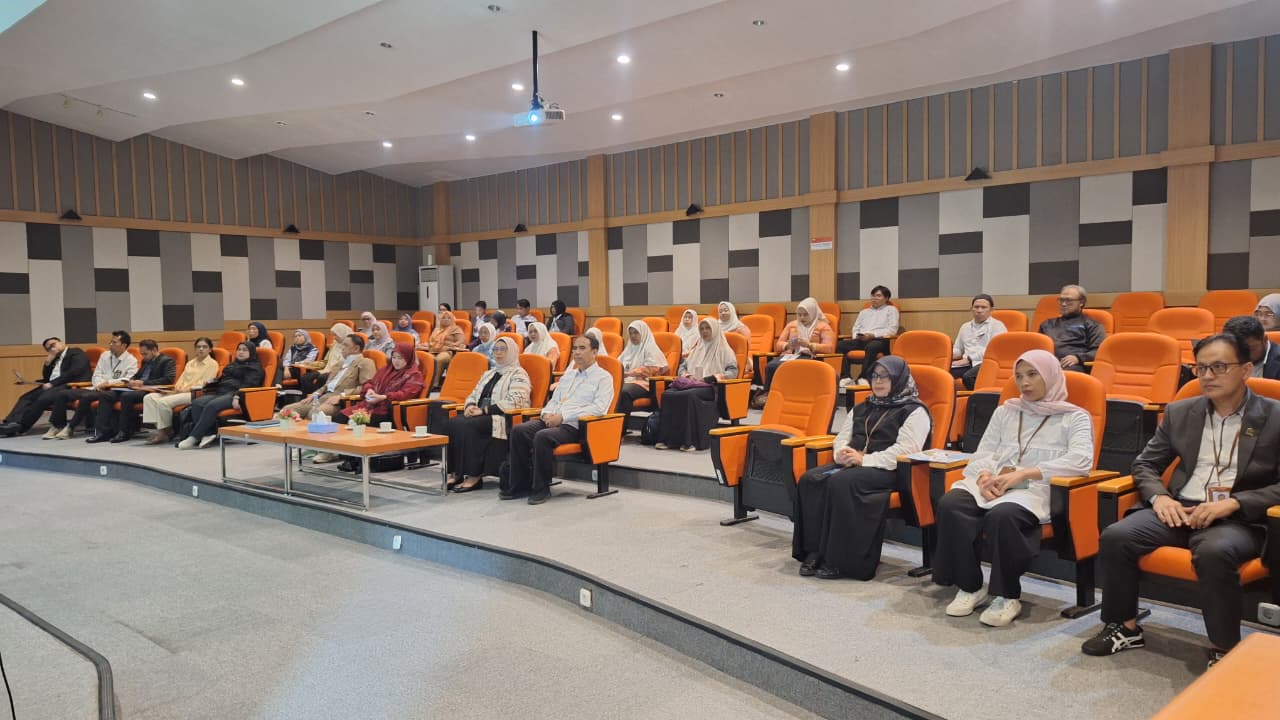
Bandung, 20 July 2026 – The SEAMEO Regional Centre for Early Childhood Care Education and Parenting (SEAMEO CECCEP), in collaboration with the National Holistic-Integrative Early Childhood Development (PAUD HI) Coalition, the Directorate of Early Childhood Education, the Directorate of Kindergarten Teachers and Special Education (GTK PK) under the Ministry of Primary and Secondary Education of Indonesia, and with the support of the Asia-Pacific Regional Network for Early Childhood (ARNEC), officially launched the Workshop on Developing the Climate Change Training Module Framework for Early Childhood Educators in Bandung.
The workshop marks an important first step toward developing a comprehensive training module that will equip early childhood educators with the knowledge, skills, and pedagogical approaches needed to introduce climate change education to young children in ways that are developmentally appropriate, contextual, and meaningful. The module is expected to serve as a practical resource for strengthening educators' capacity to foster environmental awareness from an early age.
In her opening remarks, Irma Widyastuti, Chair of the National PAUD HI Coalition, emphasized that the development of the training module framework represents a significant milestone in establishing a structured climate change education training system for early childhood educators in Indonesia. She highlighted that addressing climate change requires cross-sector collaboration involving government agencies, academic institutions, civil society organizations, and regional partners.
"We hope this collaboration marks the beginning of a high-quality training program that will have a meaningful impact on early childhood educators across Indonesia while strengthening our shared commitment to nurturing a generation that cares for the sustainability of our planet," she stated.
This collaborative initiative demonstrates a shared commitment to integrating climate change education into early childhood education through research-informed, practical, and context-sensitive approaches. The involvement of ARNEC further strengthens the regional dimension of the initiative. As a regional network dedicated to advancing early childhood care and education across the Asia-Pacific region, ARNEC promotes the development of evidence-based, inclusive, and adaptable learning resources that can be implemented across diverse social, cultural, and environmental contexts.
On the same occasion, Prof. Dr. Vina Adriany, M.Ed., Director of SEAMEO CECCEP, stressed that climate change education should go beyond teaching environmentally friendly habits. Instead, it should also introduce children to broader concepts of climate justice in ways that are appropriate for their age and level of understanding.
According to Prof. Vina, countries in the Global South, including Indonesia, are among those most affected by climate change. However, global discourse often places disproportionate blame on these countries for environmental degradation, despite extensive evidence showing that climate change is also driven by large-scale industrial activities and development patterns in the Global North.
"When discussing climate change, we must also discuss power relations. Climate change is not simply about individuals littering or using single-use plastics. While environmentally responsible behaviors remain important, children should not grow up believing that they are personally responsible for the climate crisis," she explained.
She further noted that one of the greatest challenges in early childhood education is translating the complexity of climate change into meaningful learning experiences that nurture children's curiosity, empathy, confidence, and willingness to care for the environment.
To address this challenge, the training module adopts a place-based pedagogy approach, which connects learning with children's immediate surroundings and everyday experiences. This approach allows educational activities to be adapted to diverse geographical settings, including mountainous areas, coastal communities, urban environments, and island regions.
Research has consistently shown that children's sense of connection to the places where they live contributes significantly to developing environmental stewardship and a stronger sense of responsibility for protecting nature.
Prof. Vina also emphasized that this approach aligns closely with Indonesia's local wisdom. She highlighted the Sundanese philosophy, which promotes harmony between humans and God, among fellow human beings, and with nature. These values provide a strong foundation for developing educational materials that not only build knowledge but also cultivate character, empathy, and environmental responsibility.
As a SEAMEO Regional Centre with a mandate to advance early childhood care, education, and parenting across Southeast Asia, SEAMEO CECCEP expects that the framework developed through this workshop will serve as the foundation for a high-quality, evidence-based, inclusive, and developmentally appropriate training module. The module is also expected to be practical for educators and parents while remaining adaptable for implementation across Southeast Asian countries.
Ultimately, the workshop reaffirmed that early childhood education plays a strategic role in fostering environmental awareness from the earliest years of life. Through collaboration among government institutions, professional organizations, regional networks, academics, and development partners, climate change education can help nurture a generation that not only understands the importance of protecting the planet but also embraces climate justice, environmental stewardship, and shared responsibility for building a more sustainable future across Southeast Asia.


Share This News